A thought lab for the human side of autonomous power.
Aristotle Agentic exists to help institutions understand, govern, teach, build, and fund responsible work around agentic AI before autonomous systems become invisible infrastructure.
What Aristotle Agentic is.
Training, research, development, community, civic AI.
Aristotle Agentic is designed to connect public-interest thinking with practical implementation. It produces training, research briefs, governance patterns, civic AI programs, workforce pathways, applied prototypes, and responsible venture formation.
The institute is strongest where AI crosses from conversation into consequence: public agencies, local institutions, workforce systems, autonomous tools, civic drafting, regulated sectors, and software that acts on behalf of people.
Institution and venture architecture
- Aristotle Agentic: nonprofit institute and civic AI incubator for research, training, civic AI, governance architecture, workforce readiness, and responsible venture formation.
- AristotleOS LLC: first open-core venture from the ecosystem, responsible for hosted deployments, enterprise support, customer contracts, and market-facing implementation around the MPL-2.0 AristotleOS core.
- Montana AI-X: Montana-facing civic AI, applied adoption, workforce, and field-pilot program that can feed Aristotle Agentic's incubator lane.
- Training Hub: workforce readiness, internships, apprenticeships, fellowships, and institutional training.
That structure follows the economic-development pattern used by nonprofit builders and incubators: mission-governed research, training, and community capacity on one side; market-capable implementation and revenue operations in the appropriate business entity on the other.
Nonprofit work remains public-interest first. Hosted services, enterprise support, implementation contracts, and revenue belong in the LLC or future venture entities.
Incubation as economic development.
Not a lab that stops at papers.
Aristotle Agentic borrows from proven regional economic-development models: build workforce capacity, convene public and private institutions, surface real problems, support pilots, and help responsible enterprises form around needs that are too important to leave to hype cycles.
In older industrial transitions, strong nonprofit and public-interest institutions helped communities move from training to enterprise, from abandoned capacity to new businesses, and from local knowledge to market participation. Aristotle Agentic applies that pattern to agentic AI: doctrine, training, pilots, venture candidates, and locally rooted capacity.
The lane is Aristotle Agentic's.
- Research and doctrine: the public-interest foundation for trustworthy autonomous systems.
- Training and workforce: the human capacity layer needed before adoption scales.
- Programs and pilots: Montana AI-X, Training Hub, and partner projects surface concrete needs.
- Incubator lane: promising tools, services, and field pilots become responsible venture candidates.
- Commercial entities: AristotleOS LLC and future ventures handle hosted services, enterprise support, contracts, revenue, and product operations around open or separately developed technology.
A recognizable model with a distinct contribution.
Research, field-building, and practical translation.
National AI institutes make one part of the model legible: research, education, workforce development, and partnerships organized around real-world domains. Regional incubators make another part legible: public-purpose institutions helping urgent needs become tools, jobs, companies, and local capacity.
Aristotle Agentic sits at the overlap. It is not trying to become a university lab, a venture studio, or a generic accelerator. It is a nonprofit civic AI institute that helps communities and institutions prepare for autonomous systems, then routes market-facing work into a clean commercial vehicle when that is the right structure. AristotleOS is the first example: an open-source core with commercial implementation capacity around it.
What responsible partnership can advance.
- Research products: public briefs, papers, governance patterns, evidence models, and applied doctrine for agentic systems.
- Workforce readiness: AI literacy, apprenticeships, fellowships, train-the-trainer work, and role-specific curricula.
- Civic adoption: convenings, public-sector briefings, model policies, procurement language, pilots, and trusted local implementation support.
- Venture incubation: discovery, validation, governance review, and transition support for public-interest tools that need market execution.
- Accountability infrastructure: clear separation between charitable research and any commercial IP, product revenue, or customer contracts.
Executive lead.

J. D. "Pepper" Petersen
Aristotle Agentic CEO Pepper Petersen is the author and architect of the G-Plane: a governance architecture for autonomous systems that turns human authority, institutional constraints, and evidence into operating infrastructure.
He has more than 20 years of experience in public affairs, regulated markets, energy policy, autonomous systems, and institutional trust. His work has involved major institutions and Fortune 100 companies, including Lockheed Martin on the F-22 program, Delta Air Lines, General Motors, and the National Mining Association.
Pepper has testified before Congress and regulatory bodies, managed congressional campaigns, raised nonprofit capital, organized regulated industries, and worked across defense, aerospace, transportation, mining, infrastructure, tribal affairs, union affairs, and federal policy.
He holds a bachelor's degree in political science, a master's degree in nonprofit management, and executive education in leadership and artificial intelligence from Harvard, MIT, and Oxford Said Business School. Aristotle Agentic draws on that background to study autonomous systems as problems of authority, legitimacy, risk, public trust, and institutional design.
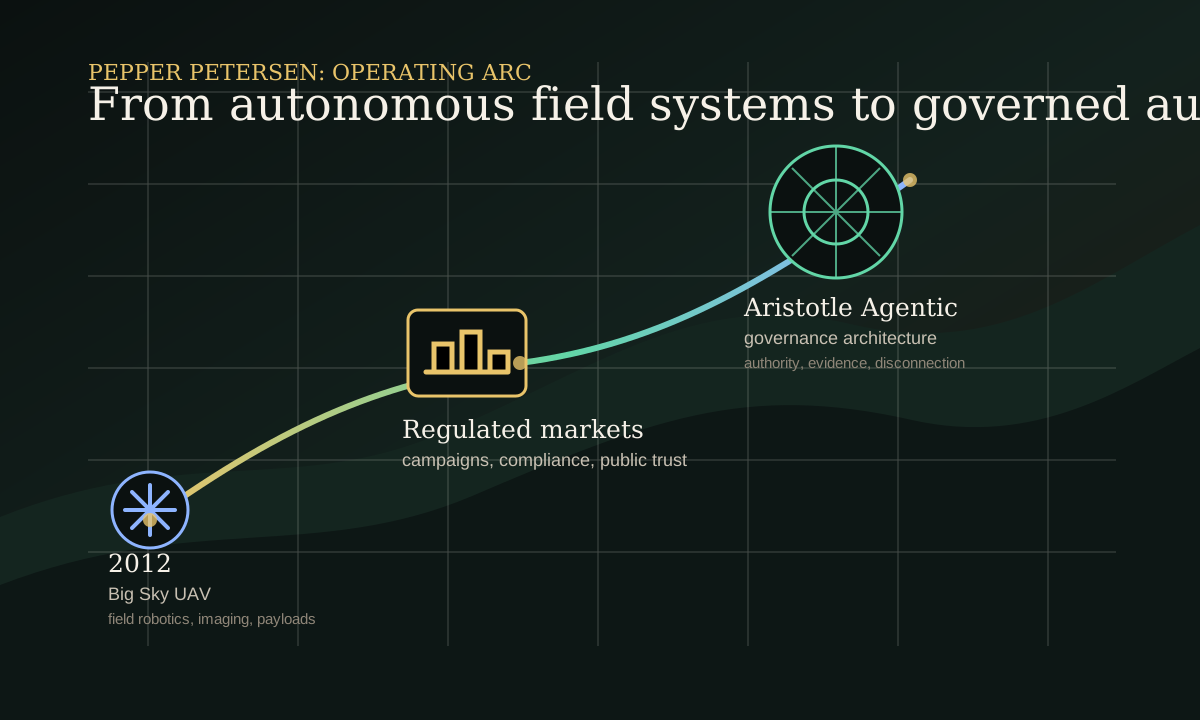
The arc behind the institute.
From autonomous machines to institutional authority.
Aristotle Agentic grew from a question Pepper had been working through since the early UAV era: what happens when autonomous systems leave the lab and begin acting in the world, around fire, infrastructure, land, law, agencies, operators, insurance, and public trust?
Big Sky UAV placed that question in the field. Public-affairs and regulated-market work placed it inside institutions where technology, law, incentives, and trust all matter at once. Aristotle Agentic translates that experience into a governance thesis for AI systems that act.
Why this experience transfers.
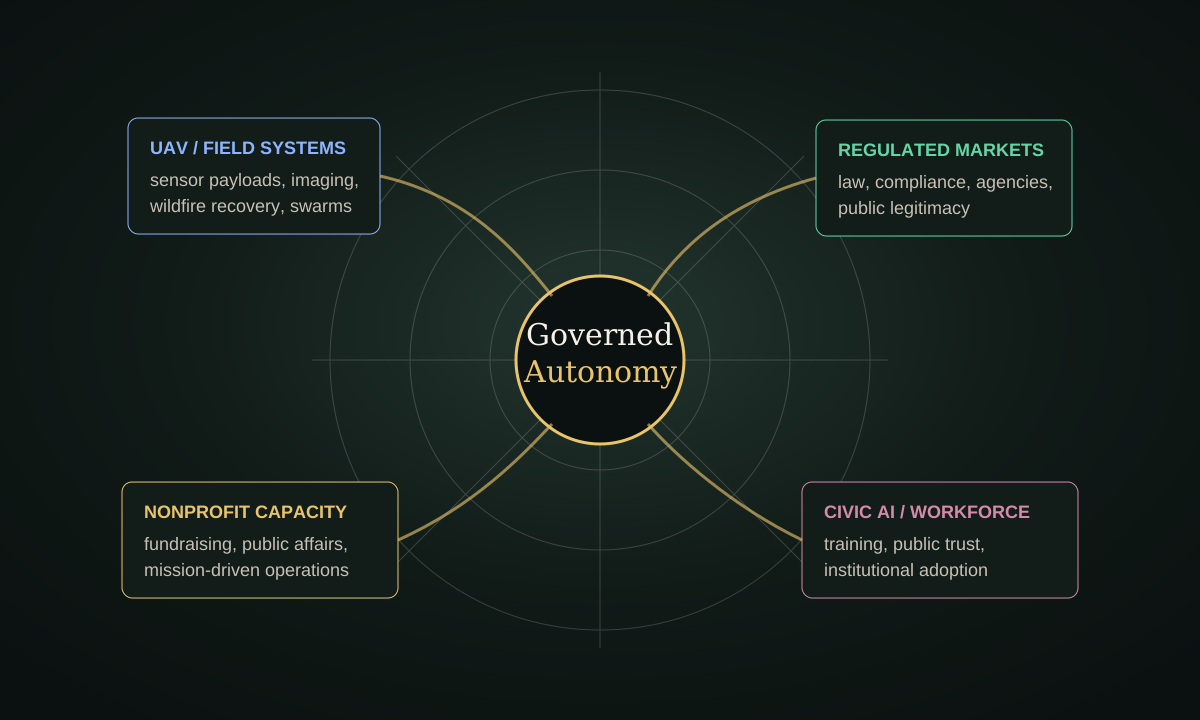
Complicated systems under public consequence.
UAVs taught the operational side: sensors, autonomy, payloads, communications, distance, uncertainty, and field conditions. Regulated-market work taught the institutional side: statutes, agencies, public language, compliance, incentives, coalition-building, and trust.
Aristotle Agentic is the synthesis. Its claim is that autonomous AI will not be governed by values language alone. It needs operating architecture that institutions, workers, public agencies, and technical teams can understand before the system acts.